Quick Overview
Current evidence suggests that tirzepatide does not meaningfully transfer into breast milk. The larger concern during breastfeeding is not drug exposure, but reduced calorie and nutrient intake due to appetite suppression. If you have just delivered and are exclusively breastfeeding, starting a medication that significantly reduces appetite is usually not ideal — primarily for nutritional reasons rather than concerns about medication passing into milk. In contrast, if you are breastfeeding a toddler only a few times per day for comfort, overall risk is likely minimal because breast milk is no longer the child’s sole source of nutrition.
Understanding the Growing Interest in GLP-1 Medications
Are you a breastfeeding mother wondering about taking weight loss medications like semaglutide (Ozempic®, Wegovy®, or Rybelsus®) or tirzepatide (Mounjaro® or Zepbound®)? You’re not alone. Many mothers are asking about these medications and how they might affect breastfeeding. These medicines — often called GLP-1 medications — have become much more common over the past few years. It’s completely understandable to want clear answers about how these medicines could affect your milk and your baby’s nutrition.
Does Tirzepatide Get into Breast Milk?
Early evidence is reassuring.
A study conducted by the InfantRisk Center (currently under review) found that tirzepatide was either undetectable or barely detectable in breast milk at doses up to 5 mg. In the small group of mothers studied, no side effects were observed in their breastfed infants.
There’s also a scientific reason this makes sense. Tirzepatide is a large protein molecule. Large protein molecules do not easily pass into breast milk in meaningful amounts. And even if tiny amounts did enter milk, your baby’s digestive system would digest them — just like it digests the natural proteins already present in breast milk.
Based on what we know so far, the medication itself does not appear to meaningfully transfer into milk.
Many mothers worry that taking medication means they must stop breastfeeding to protect their baby. While that concern is completely normal, in many cases the actual risk is much lower than people assume. Stopping breastfeeding early may mean missing out on important health outcomes for both you and your baby — including lower rates of infections and SIDS for babies, and reduced risks of heart disease, diabetes, and breast cancer for mothers.
How Do These Medications Work?
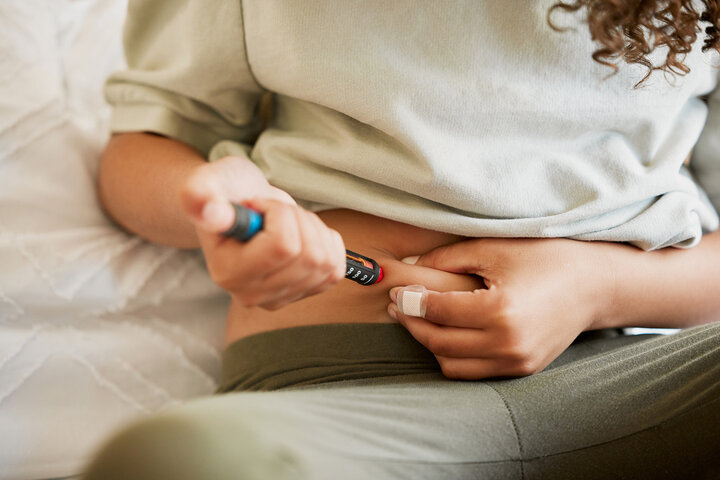
GLP-1 is a natural hormone made in your gut after you eat. It helps regulate blood sugar, appetite, and digestion. Medications like tirzepatide are designed to mimic and enhance this natural effect. Tirzepatide works on two hormone pathways to lower blood sugar, reduce hunger, and slow digestion. For many people, this leads to meaningful weight loss and improved metabolic health.
However, like all medications, these are not perfect. Common side effects include nausea, vomiting, diarrhea, constipation, abdominal discomfort, fatigue, and headaches — especially when first starting or increasing the dose.
The Bigger Issue Isn’t the Drug — It’s Your Appetite
Although tirzepatide does not appear to significantly enter breast milk, it does significantly reduce appetite. As a result, studies suggest calorie intake may drop by up to 39%.
That matters — because lactation is already a naturally catabolic state.
Your body is designed to mobilize stored energy to make milk. But this natural catabolism is carefully regulated and supported by increased calorie intake. In fact, lactation typically requires more energy and nutrients than pregnancy. On average, breastfeeding mothers need about 2,000 calories per day plus an additional ~250 calories for milk production — sometimes more depending on body size and milk output.
Food doesn’t just have calories, though. It has the vitamins and minerals your body needs to keep functioning.
Even when not breastfeeding, people who take GLP-1’s are more likely to become nutrient deficient. If you’re eating far less because you simply aren’t hungry, it makes sense. If you are nutrient deficient when breastfeeding, you milk might also be missing nutrients, or milk supply can decrease. You may also feel lightheaded, fatigued, irritable, or dehydrated. Dehydration alone can impact milk production.
So the main concern during breastfeeding is not drug transfer — it’s whether you’re getting enough calories, fluids, and nutrients to support both yourself and your baby.
A Note for Mothers with Obesity
If you have obesity, your situation is more complicated (and potentially more nuanced) than the general guidance above suggests. Obesity itself is one of the most underrecognized causes of low milk supply, working through several mechanisms: excess fat tissue slows the hormonal shift that "turns on" full milk production after delivery, high leptin levels interfere with prolactin response, and insulin resistance (extremely common in obesity) disrupts the metabolic signaling your mammary gland needs to produce milk efficiently. Here's where it gets interesting: some of the mechanisms tirzepatide corrects (insulin resistance, chronic inflammation, leptin excess) are the very mechanisms driving obesity-related low supply. Some improvements in insulin sensitivity and inflammatory markers can begin emerging within 4 to 8 weeks of treatment Leptin normalization, however, follows actual fat mass reduction rather than drug exposure directly, meaning those benefits likely take months of sustained treatment. Either way, these potential benefits arrive well after the first two weeks postpartum (when supply is most vulnerable) and well after appetite suppression from even the starting dose is already active. We don't yet have the research to know whether long-term metabolic improvements ultimately outweigh early appetite suppression risk.
When Is a Better Time to Start?
If you have flexibility, it may be wise to wait until your baby is at least 7 months old — and waiting until 9–12 months may be even safer.
During the first 6 months of life, breast milk is your baby’s sole source of nutrition (if exclusively breastfeeding). A significant drop in your calorie intake during this time leaves no nutritional backup. After 6 months, babies begin eating solid foods. By 7 months and beyond, those foods start providing some nutrients to the baby. The more “other” foods baby gets, the less risk there is from nutrient gaps in your milk.
Waiting also gives your milk supply time to fully establish and stabilize. That said, if you need the medication for medical reasons such as diabetes, the benefits may outweigh the risks — and that decision should always be made with your healthcare provider.
How to Protect Your Milk Supply While Taking Tirzepatide
If you and your provider decide that tirzepatide is appropriate while breastfeeding, nutrition becomes your top priority.
Try to eat small, frequent meals even if you don’t feel very hungry. Include protein at every meal or snack (and eat it first!). Focus on nutrient-dense foods like eggs, chicken, fish, beans, tofu, whole grains, fruits, vegetables, nuts, seeds, and healthy fats. When appetite is reduced, every bite matters.
Tracking your calorie intake (especially in the beginning) can be helpful. Hunger cues may not be reliable while on this medication. Free apps like MyFitnessPal or Lose It! can help you estimate your intake.
The InfantRisk Center provides detailed guidance and a calorie calculator specifically for breastfeeding mothers in their article:
Weight Loss in Lactation
https://www.infantrisk.com/content/weight-loss-lactation
This resource offers practical advice on safe weight loss, calorie targets, and protecting your milk supply while trying to improve your health.
Hydration is also critical. Aim for 2–3 liters of water per day, especially if you are experiencing nausea, vomiting, or diarrhea. Dark urine, dizziness, or headaches can be signs you need more fluids.
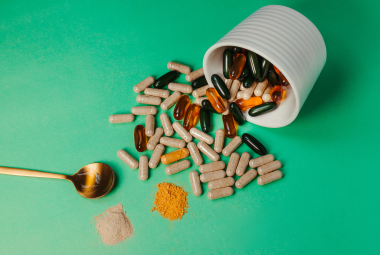
Even with careful eating, you may fall short on certain nutrients such as iron, calcium, magnesium, folate, and vitamin D. A prenatal or high-quality multivitamin can help fill in those gaps (for you and for baby). Working with a registered dietitian can also provide personalized support.
Finally, monitor your baby. Watch for normal weight gain, feeding patterns, wet diapers, and developmental milestones. Keep your pediatrician aware of your medication use when breastfeeding.
A Note About Rapid Weight Loss
Very rapid weight loss can increase fatigue, raise the risk of gallstones, and potentially reduce milk supply. Slow, steady weight loss (~1 pound per week or two) is generally safer during breastfeeding.
Important Birth Control Reminder
Tirzepatide slows digestion and can interfere with the absorption of oral contraceptive pills. If you are taking oral birth control, discuss this with your healthcare provider.
The Bottom Line
Current evidence suggests tirzepatide is unlikely to transfer into breast milk in meaningful amounts, and no adverse effects have been observed in early infant data. The bigger concern is making sure you are consuming enough nutrients, calories, and water.
If you are exclusively breastfeeding a newborn, appetite suppression may create challenges during a time of high energy demand. If you are occasionally nursing a toddler, risk is likely minimal.
With thoughtful nutrition, close monitoring, and coordination with your healthcare provider, mothers can continue breastfeeding while using tirzepatide.
Krista Savage RNC-MNN BSN IBCLC
Lauren Covey MBA P4
Katie Boatler RN BSN
Kaytlin Krutsch PhD PharmD MBA BCPS
Resources:
Diab H, Fuquay T, Datta P, Bickel U, Thompson J, Krutsch K. Subcutaneous Semaglutide during Breastfeeding: Infant Safety Regarding Drug Transfer into Human Milk. Nutrients. 2024 Aug 28;16(17):2886. doi: 10.3390/nu16172886. PMID: 39275201; PMCID: PMC11397063.
Heise T, DeVries JH, Urva S, Li J, Pratt EJ, Thomas MK, Mather KJ, Karanikas CA, Dunn J, Haupt A, Milicevic Z, Coskun T. Tirzepatide Reduces Appetite, Energy Intake, and Fat Mass in People With Type 2 Diabetes. Diabetes Care. 2023 May 1;46(5):998-1004. doi: 10.2337/dc22-1710. PMID: 36857477; PMCID: PMC10154650.
Baxter, J. B., Wasan, Y., Daniel, A. I., Begum, K., Hussain, A., Iqbal, J., Aufreiter, S., Beggs, M. R., Duan, L., Greco, A., Huang, C., Soofi, S., Bandsma, R. H., Bhutta, Z. A., & O'Connor, D. L. (2025). Maternal multiple micronutrient supplementation in rural Pakistan increased some milk micronutrient concentrations, but not infant growth, at three-months postpartum: a randomized controlled trial substudy. Am J Clin Nutr, 122(1), 174-184. https://doi.org/10.1016/j.ajcnut.2025.05.019
Mozaffarian, D., Agarwal, M., Aggarwal, M., Alexander, L., Apovian, C. M., Bindlish, S., Bonnet, J., Butsch, W. S., Christensen, S., Gianos, E., Gulati, M., Gupta, A., Horn, D., Kane, R. M., Saluja, J., Sannidhi, D., Stanford, F. C., & Callahan, E. A. (2025). Nutritional priorities to support GLP-1 therapy for obesity: a joint Advisory from the American College of Lifestyle Medicine, the American Society for Nutrition, the Obesity Medicine Association, and The Obesity Society. The American Journal of Clinical Nutrition, 122(1), 344-367. https://doi.org/https://doi.org/10.1016/j.ajcnut.2025.04.023
Nommsen-Rivers LA. Does insulin explain the relation between maternal obesity and poor lactation outcomes? Adv Nutr. 2016;7(2):407-414.
Nommsen-Rivers LA, Chantry CJ, Peerson JM, Cohen RJ, Dewey KG. Delayed onset of lactation among first-time mothers is related to maternal obesity and factors associated with ineffective breastfeeding. Am J Clin Nutr. 2010;92(3):574-584.